Travelogue: Sea Otters on California’s Rugged Coast
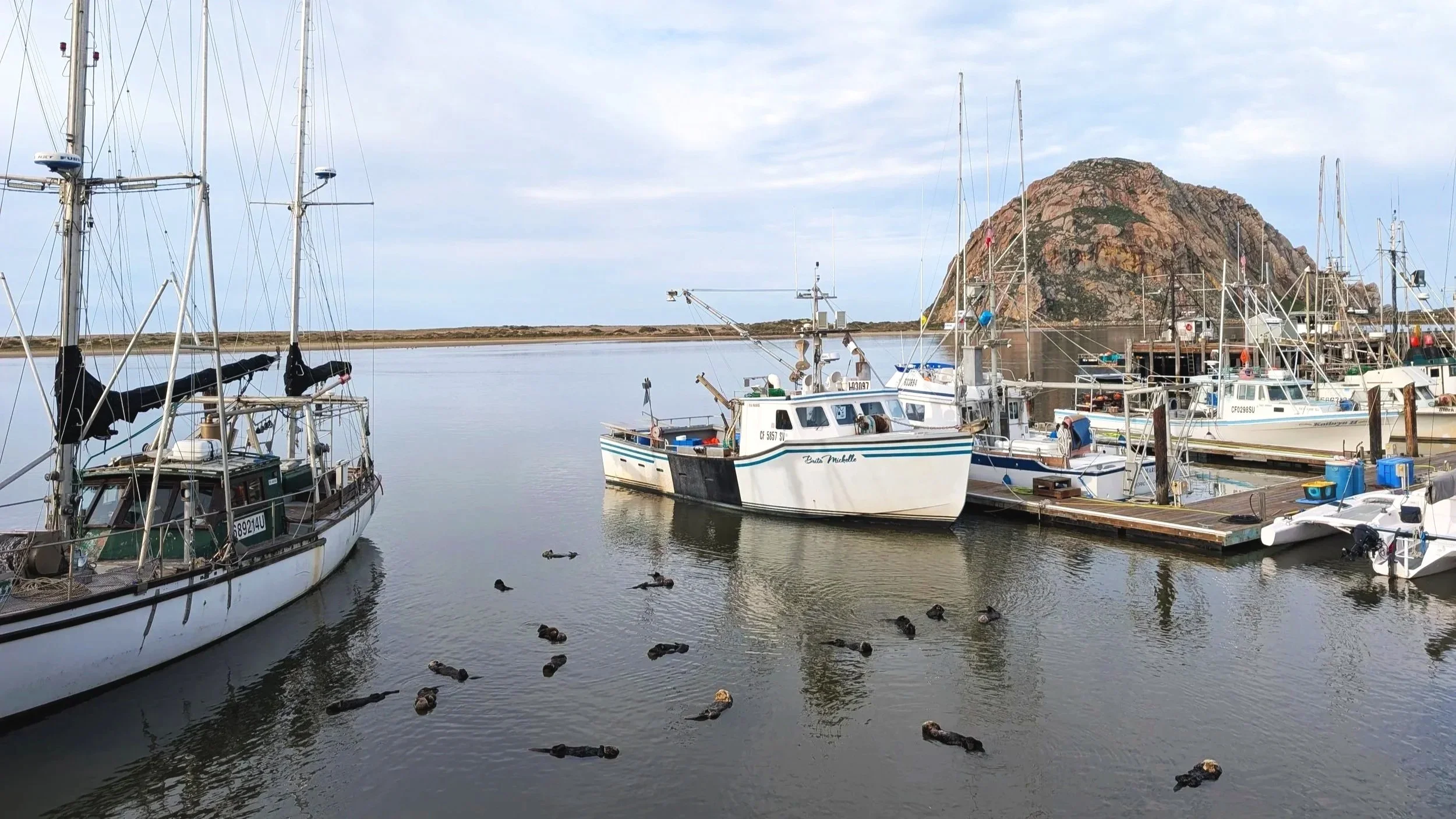
Otters float in the water of Morro Bay.
Driving Highway 1 along California’s breathtaking coast is one of the most exhilarating road trips in the world.
You can’t help but feel sort of like a movie star wrapped in the scenery of that drive — cliffs plunging into blue-green water, windswept crags, beaches nestled between rock and surf, clouds stretching forever over the Pacific.
There’s also a wildness to it. Even now.
The Big Sur area, specifically, still feels a little out there. Cell service drops. Businesses thin out. And before you go, you're obliged to check whether Highway 1 is even open.
Before my latest trip, it had just reopened after a devastating rock slide that kept the iconic stretch disconnected for nearly three years. As of December 2025, cars were finally moving through again.
Unfortunately, the day we set off on a short three-day drive from San Francisco to Morro Bay, the highway closed again — this time due to severe flooding.
Big Sur isn’t convenient. When the road closes, you don’t reroute for 20 minutes. You reroute for hours inland, away from the edge.
But this road trip was about embracing the wilds — especially the wildlife.
On this trip we saw trotting coyotes, barking sea lions, galumphing elephant seals, and countless coastal birds. In other seasons, you can spot whales cruising just offshore.
And then there are sea otters — one of the big attractions that called to me and my travelmate.
Sea otters are cute, expressive, social and often visible from land. Also: did I mention they’re cute.
All along the California coast you can catch them fishing for crabs, prying open oysters or wrapped in kelp so they don’t drift. Sometimes they’re alone. Sometimes they raft together in groups, their little paws clutching each other.
Oftentimes, even in areas that are not prime spots, you can see them a few hundred feet offshore, floating along. It’s easy to mistake them for driftwood or kelp, but a pair of binoculars goes a long way in confirming what you're looking at has a heartbeat.
On this short trip, we had several notable run-ins with sea otters. The first came in Moss Landing — a well-known otter hotspot. The small working community, with its power plant and protected waterways, offers calmer water that otters seem to favor.
We arrived in the late afternoon and came across a mother and an older pup — probably nearing independence — drifting along an inlet about 20 yards below us. We picked our way from boulder to boulder along the riprap and watched them for about half an hour.
The mother was having crab for dinner — several of them.
She would dive, leaving the pup floating on its back, paws stretched skyward. The pup had no interest in fishing. It waited.
Mom would resurface with a crab, locate the pup, latch on — and begin eating. At one point she was double-fisting crabs. One active meal in her claws and teeth. A second resting on her belly like a side dish waiting its turn.
In that half hour, we watched three to five crabs come up from the seabed.
Sea otter pups are completely dependent on their mothers for the first six months of their lives. During that time, a mother’s workload is intense — she needs to eat significantly more to sustain both herself and her pup.
While we had seen some otters in the distance earlier, this felt like a proper introduction to our otter adventure.
Our next memorable encounter came unexpectedly during a visit to one of California’s most stunning coastal parks: Point Lobos State Natural Reserve. Point Lobos features dramatic cliffs, short accessible trails and Weston Beach, a prime tidepooling destination.
The day we visited, however, the beaches were closed due to the same harsh weather that shut down the highway. The wind howled. Rain whipped into our faces. The ocean churned in blue-green chaos streaked with whitecaps.
We hadn’t come for otters. We found them anyway.
From a cliff near Bird Island, we looked down into a rocky cove and spotted two otters rising and falling with the swell. The water was rough. The wind was relentless. The otters did not care.
They rolled, twisted and rode the chaotic waves crashing into the rocky shore. It was exhilarating to watch them in water that looked hostile to everything else.
Our otter luck was strong on this trip — but it got even better as we continued south to Morro Bay. Though to be honest, you don’t really need luck to see otters in Morro Bay.
Morro Bay is one of the more beautiful coastal towns in California. The town’s defining feature is the massive Morro Rock, which rises from the water and seems to watch over the entire harbor.
In its shadow are fishing boats, docks and the Embarcadero, which forms a waterfront that feels touristy — but not overly so. Saltwater taffy. Seafood restaurants. Easy walking.
And otters. Everywhere. Near the docks. Near the rock. Throughout the harbor.
Our best viewing came from the Embarcadero sidewalk, looking down at roughly twenty of them rafting together in the evening and early morning light. No binoculars needed.
They weren’t hunting. They were grooming. Waking slowly. Rubbing their faces. Holding onto pups. Floating shoulder to shoulder.
Small crowds came and went, smiling. For locals, they might be as common as seagulls. For visitors, they feel extraordinary.
You can stand there for hours.
We were only in Morro Bay for parts of two days and one evening, but it was a memorable short stay. We planned to leave early on our last morning. Instead, we lingered until midday.
It’s hard to leave Morro Bay without a smile. It’s harder to leave the California coast at all.
CRAIG SAUER is a writer, communicator and former journalist living in Fitchburg, Wis. He enjoys photographing wildlife, including Otters.